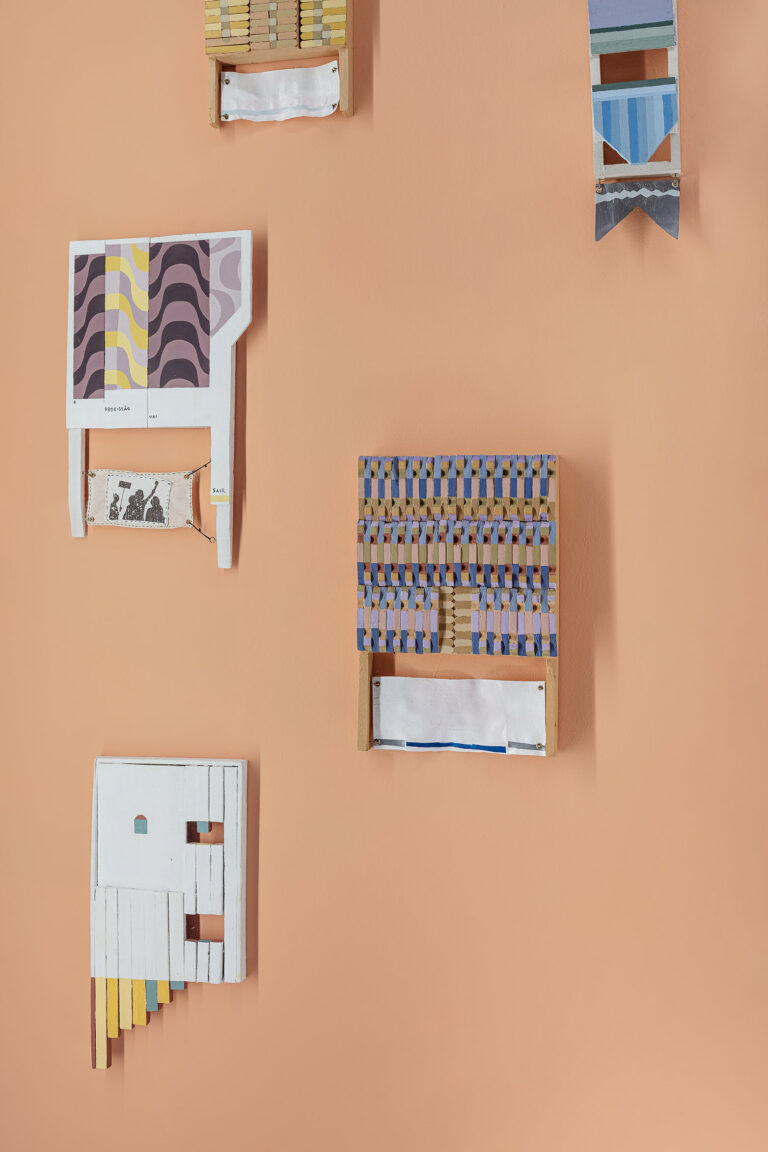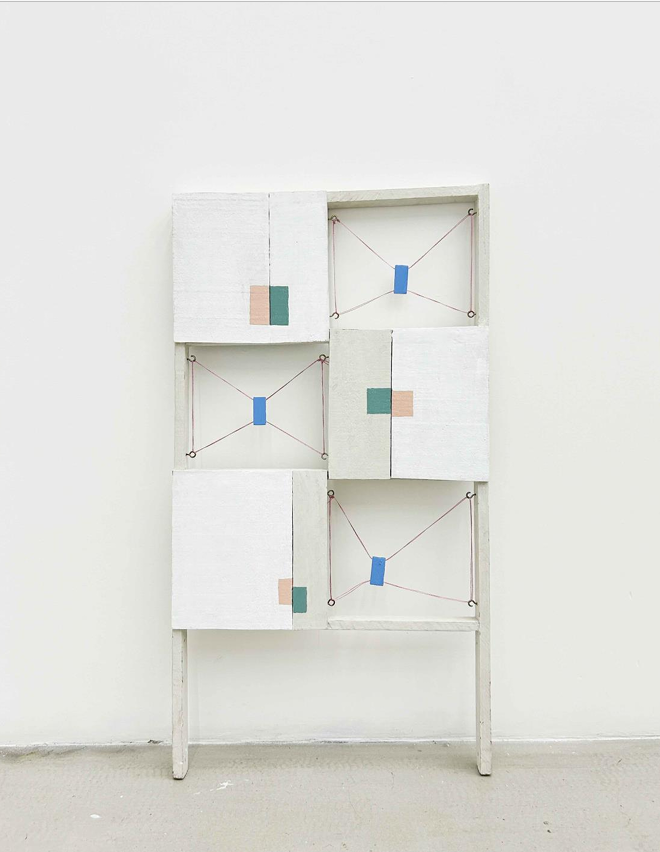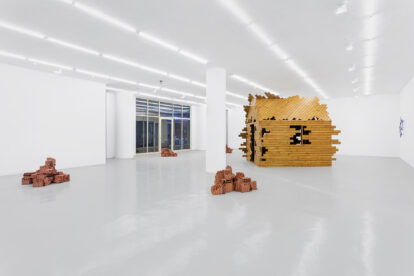
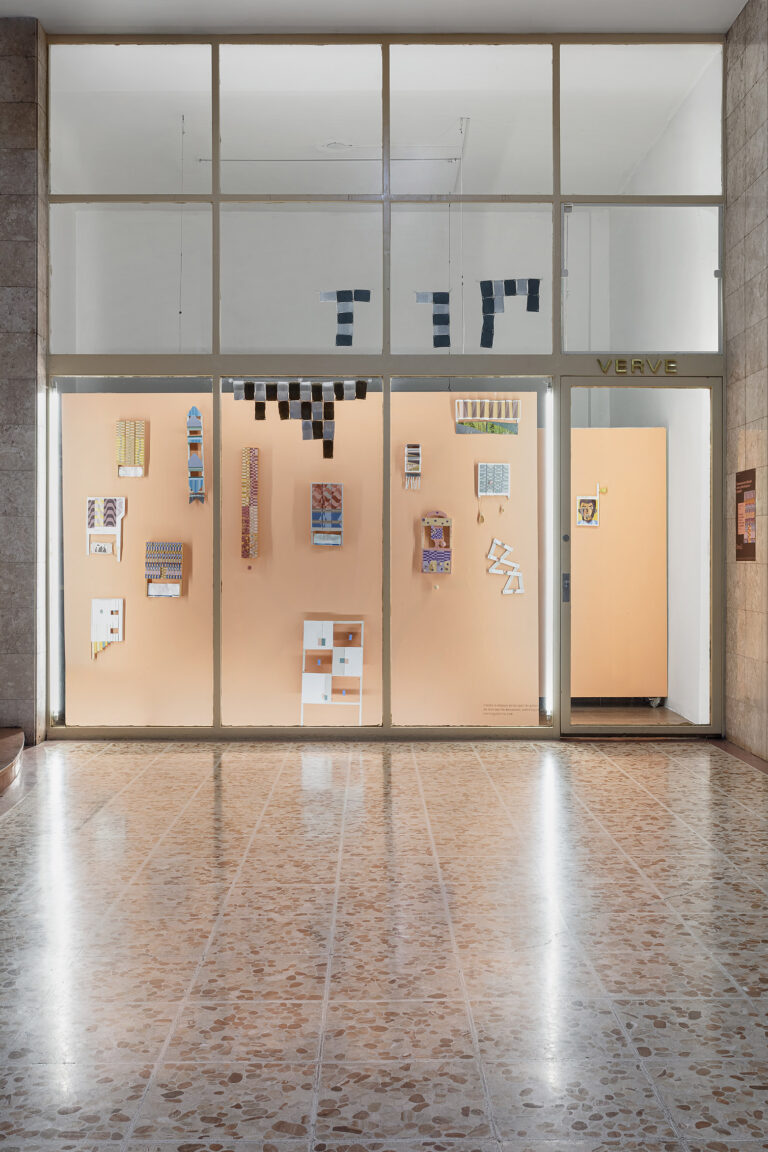
In this display window, Desali articulates the impersonal urban design of downtown São Paulo with an affective landscape linked to the outskirts of Contagem and the countryside of Minas Gerais, central references in his visual formation. Drawing from the patterns of the Louvre Building, as well as plastic waste and wooden crates collected during his walks, he establishes relationships between materials, scales and distinct origins, connecting his work to his own biography, to structure and to territory. In dialogue with the daily struggle he identifies in Marighella, he names, in the titles of his works, objects and figures from the domestic environment, the studio and communal experience – such as “Cutting Board,” “Wooden Spoon,” and “Clothespin”- attributing to them an everyday political dimension.