
THE EARTH, THE GUNPOWDER,
THE CEDAR, AND THE FLORA
It was not on the first, second, or third attempt that the community of Canudos was destroyed. In June 1897, with the fourth military expedition, the catastrophic struggle between the ‘conselheiristas’ and the federal troops entered its decisive stage. The target was the settlement established in the Bahian backlands in 1893 under the leadership of Antônio Conselheiro, a preacher from the northeastern state of Ceará. Named Belo Monte by its founder, the settlement became a kind of heterotopic, self-sufficient promised land centered on the messianic figure of the “Good Jesus.” Seen by its inhabitants as a horizon of collective well-being, it attracted a growing number of followers because it was not founded upon the powers of private property, the Church, or the judiciary, represented respectively by landowners, priests, and local authorities.
The settlement’s autonomy rested on forms of survival characteristic of communities distant from centers of power: subsistence farming and livestock raising, local commerce, and communal labor. Meanwhile, in the federal capital of Rio de Janeiro, the Republic was still consolidating itself following the coup d’état led by sectors of the military and the coffee-producer elite, dissatisfied with abolitionism and recently implemented economic measures. The new regime sought to affirm its founding principles and extend its authority across the national territory by suppressing forms of social organization that escaped its political logic.
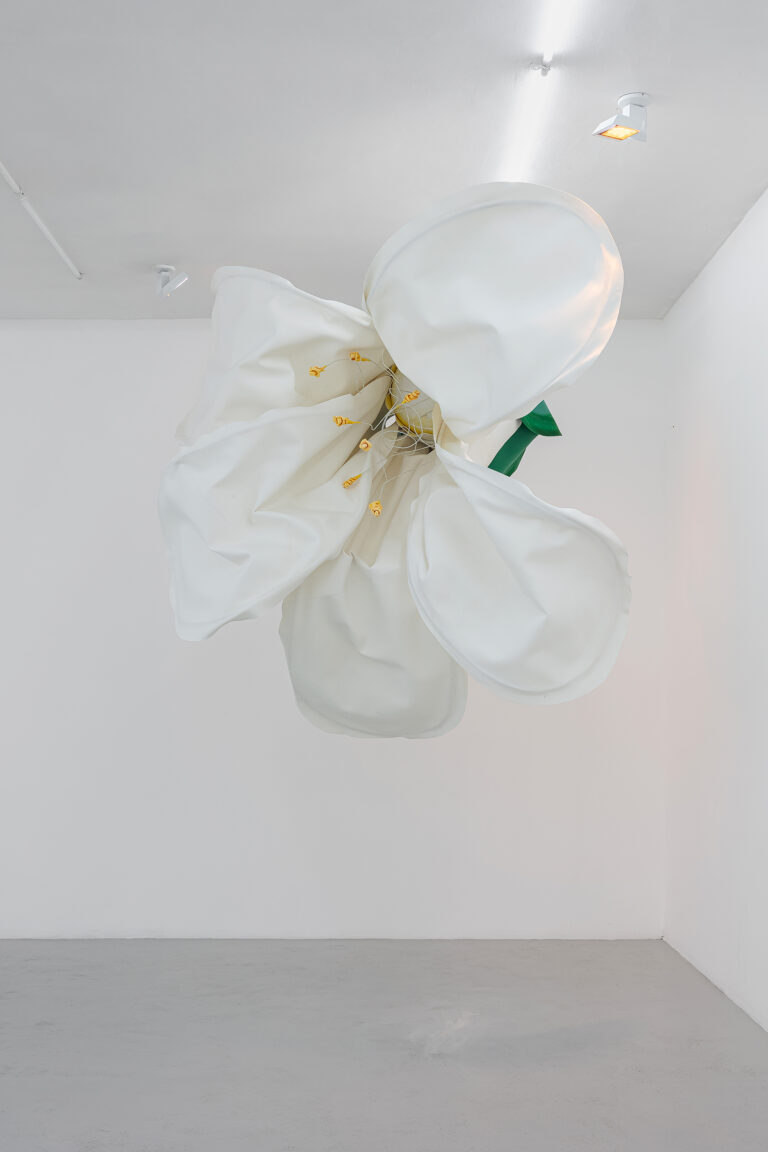
Igor Vidor, whose artistic practice connects the violence of the active present with the remnants of its past, finds in the events that shaped Republican Brazil striking analogies with contemporary conflicts in the country. By turning his attention to the Canudos massacre, he also investigates the semantic transformation derived from it and later appropriated by the capital: the ‘favela’ – once the name of a hill in Canudos, and before that, of a flowering plant native to the caatinga [a semi-arid biome unique to northeastern Brazil]. As the point of departure for his artistic research, the ‘favela’ guides a visual investigation into the militarization of public security by the Global North, Rio de Janeiro’s militias, the deaths of marginalized youth, and the entanglements between drug trafficking, public figures, and institutions of power. On account of Brazil’s tightening political climate, Vidor sought asylum in Europe, where he first encountered weapons manufactured by Mauser—the M94 rifle customized for the Brazilian Army. It was the very same firearm used by Republican troops in Canudos and later captured by the conselheiristas during the conflict.
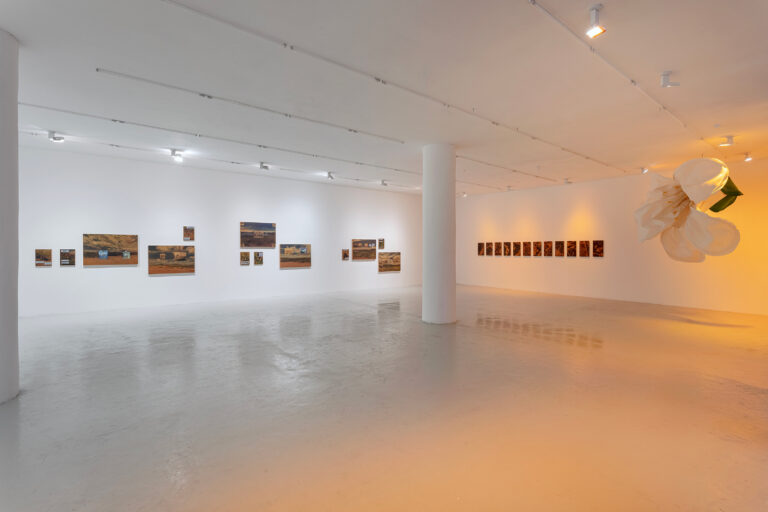
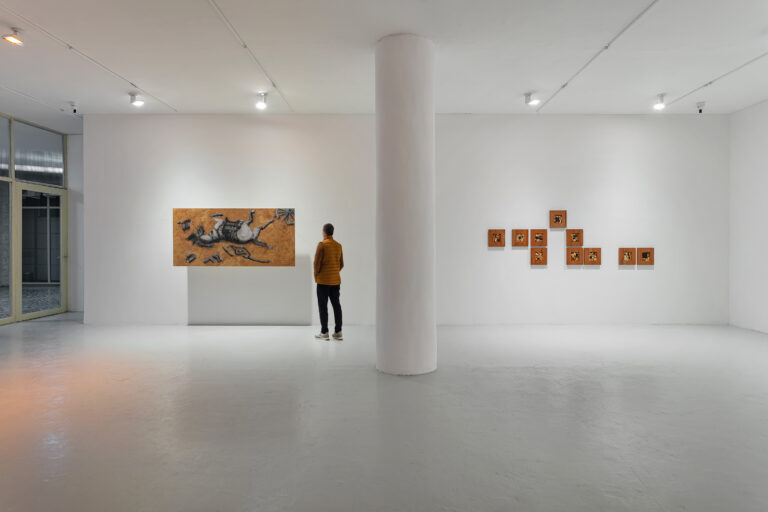
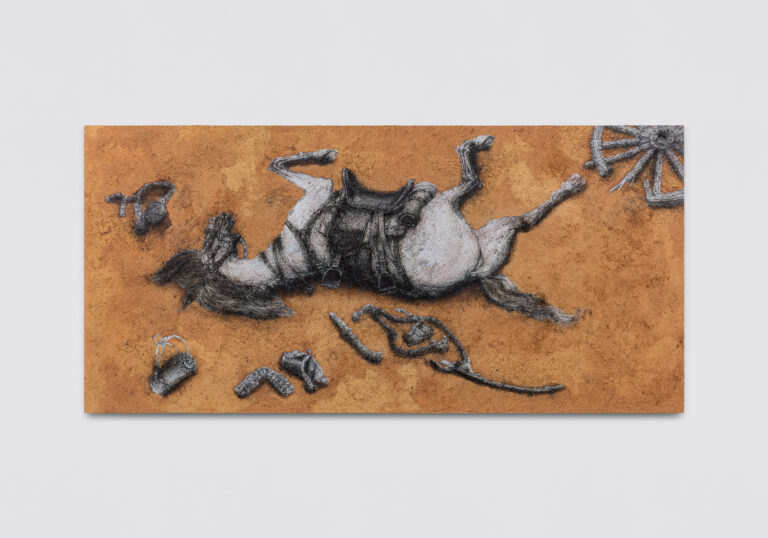
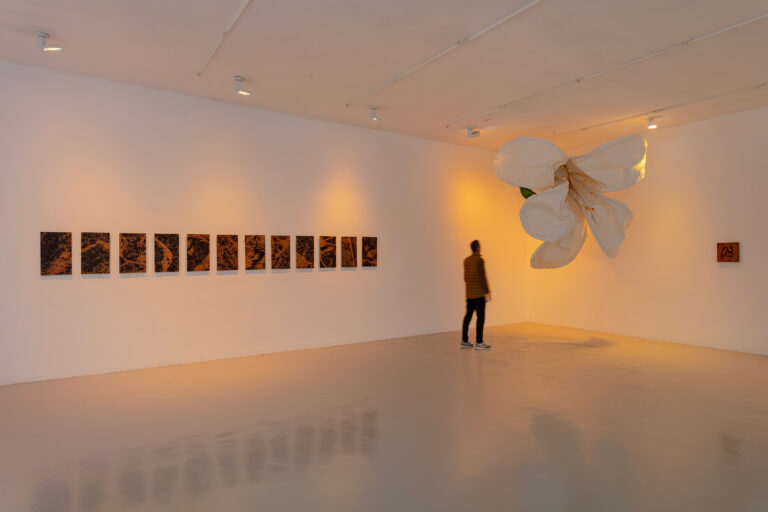
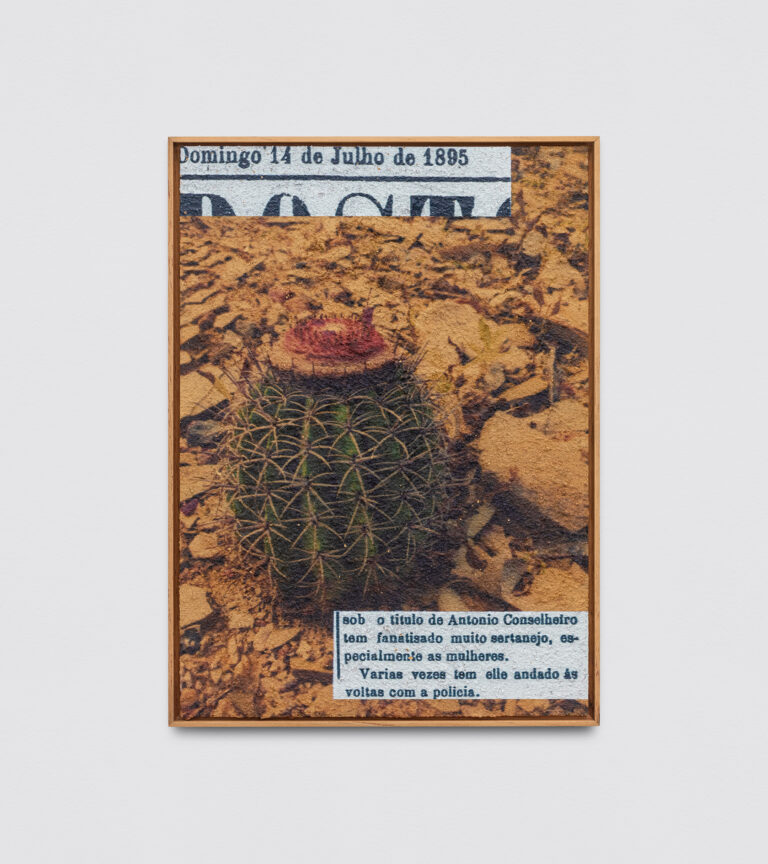
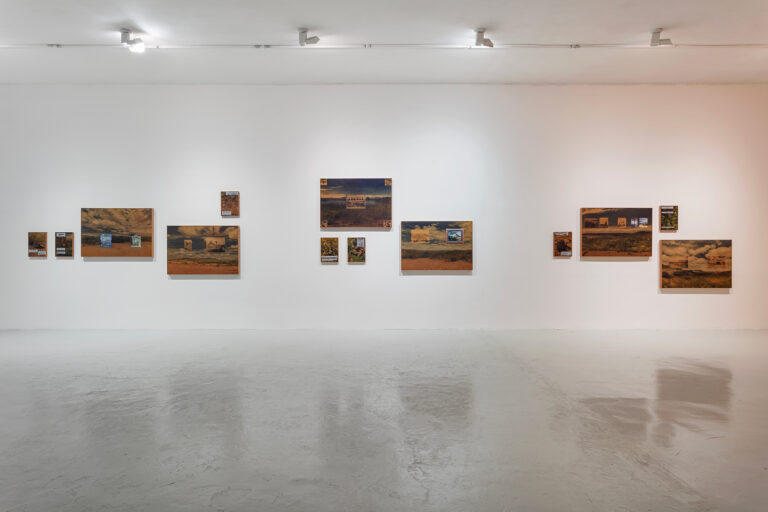
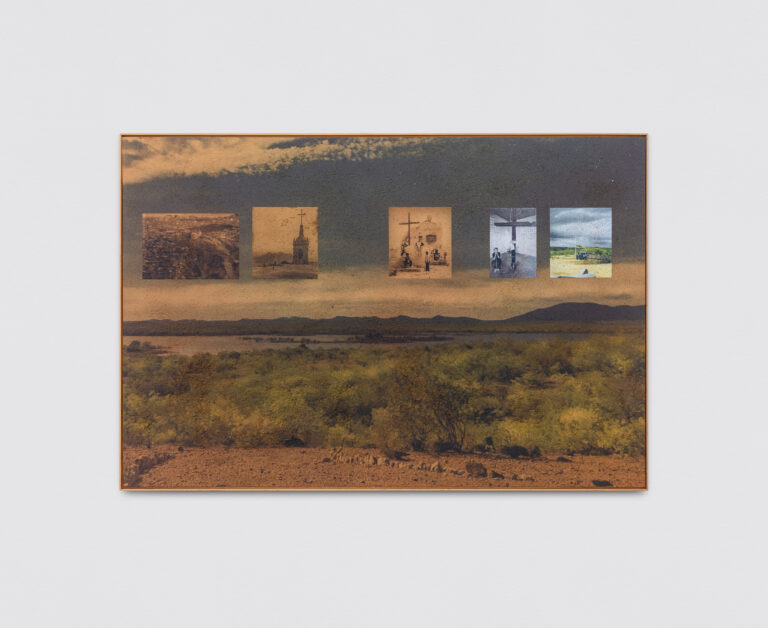
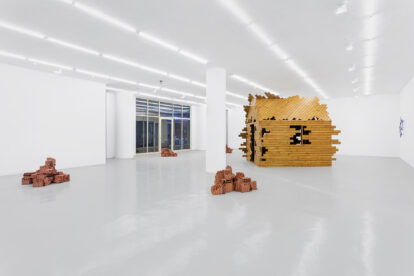
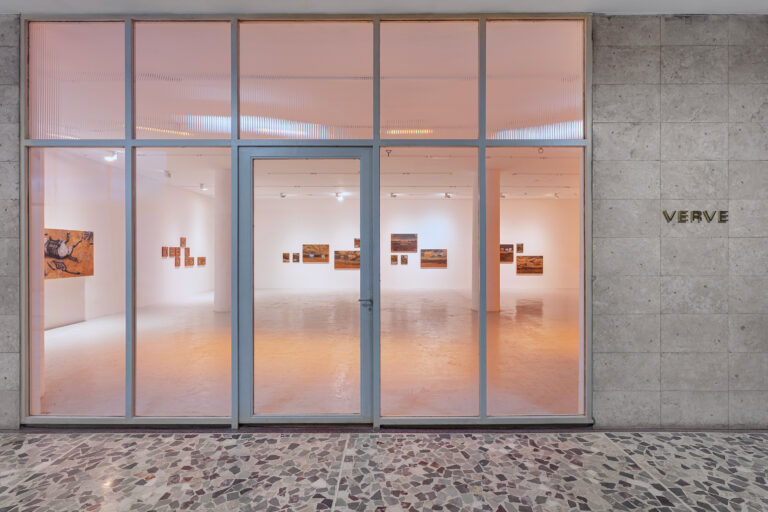
Attentive to the formal possibilities embedded in these histories, the artist employs gunpowder to print topographies, urban silhouettes, and forms drawn from local fauna by fixing and detonating it on surfaces made of earth and wood. In an inverse gesture, he develops photographs and historical documents within different compositions of earth, applying water whose varying quantities alter the tonalities of the surface. These images bring together distinct periods and places that, each in its own way, remain connected to Canudos. The compositions conjure the historical apparatuses through which the existence of this population has been apprehended: published media accounts, the collections of regional and international museums, and the photojournalistic records of Flávio de Barros, all interwoven with the vernacular photographs produced by the artist himself during his repeated visits to the Canudos State Park.
It is significant that Vidor turns to photography – a medium so often associated with the registration of reality – in order to activate its value as documentary evidence while examining the workings of memory and the production of particular absences. His aim is to visually reintroduce the archive of Belo Monte beyond the portrait constructed by newspapers from southeastern Brazil, in which its inhabitants were described as “archaic” because of their orthodox Catholic religiosity, their reverence for the monarchy, and their fiscal, legal, and administrative organization. This framing sustained the narrative fabricated by the Republic to suppress the Canudos experiment, portraying it as pernicious through terms such as jagunços, which reinforced the hierarchy and distance between urban modernity and the stigmatizing representations projected onto Brazil’s northeastern hinterland.
For this reason, Vidor draws upon Georges Didi-Huberman’s metaphor of the fireflies through intermittent photographs capable of touching the remaining points of light left by Conselheiro’s community and by the mechanisms that orchestrated its disappearance. These images are framed in cedar, alluding to the event that ignited the war against Belo Monte. Armed conflict began one year before the massacre, during the construction of the settlement’s church, when the community ordered valuable cedar timber from Juazeiro and paid for it in advance. When the wood never arrived and no explanation was provided, the inhabitants of Canudos threatened to travel to the town and retrieve the material by force. Fearing rumors of an invasion, local authorities requested military intervention from the Bahian government.
The New Church of Good Jesus was never completed. Yet until its final destruction, it remained remarkably resilient due to the military development of the conselheiristas – made possible through the disarmament of government troops and their access to European military technology – combined with the backlanders’ intimate knowledge of the geological and climatic conditions of the sertão [as the semi-arid hinterland of northeastern Brazil is known]. Mauser rifles and Krupp and Whitworth cannons were supplied by a natural arsenal: saltpeter for producing black powder, river stones, and rounded rocks transformed into projectiles constituted an inexhaustible reserve of ammunition.
This convergence imposed an unforeseen imbalance upon the successive military campaigns, one amplified by the social technologies intrinsic to the territory itself. Amid thorny vegetation and the winding paths of the sertão, the abyssal lines drawn by Brazil’s Southeast – fracturing the nation culturally, socially, and economically – became starkly visible. As in Euclides da Cunha’s writings, the caatinga, having armed itself “to react against the brutal order,” crossed its aridity in a state of latent life until it was transformed “amid the splendors of spring,”¹ revealing that “the backlands are a fertile valley. They are a vast orchard without an owner.”²
The notion of a “land without an owner” may suggest the absence of private property, but not the emptiness of territory. The sertão bore traces of previous occupations sustained through relationships of permanence, use, and belonging. Although Euclides da Cunha cast the land itself as a participant in the conflict, his Republican perspective ultimately subjected it to an environmental determinism now understood as racist, one that linked nature, bodies, and social destiny within a hierarchy opposing civilization and backwardness. From a more contemporary understanding of territory, Milton Santos’s concept of “roughness” (‘rugosidade’), developed to interpret the historical formation of space, allows Canudos to be understood through the accumulated presences, uses, ruins, and erasures sedimented within it. The massacre, the industrial dogma, and the zone of erasure may thus be read as interventions directed against this territorial roughness, bringing the experience of Belo Monte into dialogue with other territorial struggles.
“Everything you see over there is a living cemetery,”³ explains João Travessia, a descendant of a conselheirista, while standing before the site of the former Belo Monte in an interview with Odorico Tavares. Today submerged beneath the waters of the Cocorobó Dam, built under orders from the Vargas administration, the village’s ruins remain inaccessible, preventing direct access to the territory and complicating the artist’s archaeological revisitations. Although its exact location can now only be approximated, the area can still be seen to the south from Favela Hill, where Igor photographed the landscape between 2019 and 2026, and where, between 1896 and 1897, the Brazilian Army positioned itself to bombard Belo Monte with Krupp artillery. It was also from this hill that soldiers – once discharged from military service – carried the name favela to what would become Providência Hill in Rio de Janeiro, where they settled after being denied the housing they had been promised. From that moment onward, favela came to designate other Brazilian settlements shaped by the geography of exclusion and by enduring historical structures of oppression.
There can be no beauty in extermination. Yet there may still exist a minimal poetics in that which insists on surviving it, and it is precisely to this persistence that Igor Vidor’s research remains attached. Didi-Huberman’s image of the firefly peoples approaches this fragile gesture when they “do the impossible to affirm their desires, emit their own flashes, and direct them toward others.”⁴ Like the favela flower itself, which undergoes cycles of dormancy and preservation before once again covering the arid backlands, these spaces of return also make the contemplation of memory possible: the Canudos State Park, the Antônio Conselheiro Memorial, the Popular Institute Memorial of Canudos, the João Régis Museum, and the Vó Izabel Museum.
Notes:
¹ CUNHA, 2014, p. 42.
² CUNHA, 2014, p. 54.
³ TAVARES, 1993, p. 42.
4 DIDI-HUBERMAN, 2011, p. 155.
Bibliography:
TAVARES, Odorico. Canudos: 50 Anos Depois. Salvador: Conselho Estadual de Cultura; Academia de Letras da Bahia; Fundação Cultural do Estado da Bahia, 1993.
CUNHA, Euclides da. Os Sertões. Rio de Janeiro: Fundação Darcy Ribeiro/Brasília: Editora Universidade de Brasília, 2014. 623 p. (Biblioteca Básica Brasileira, vol. 24).
SANTOS, Milton. A Natureza do Espaço: Técnica e Tempo, Razão e Emoção. 4. ed. São Paulo: Edusp, 2006.
DIDI-HUBERMAN, Georges. Sobrevivência dos Vaga-Lumes. Tradução de Vera Casa Nova e Márcia Arbex. Belo Horizonte: Editora UFMG, 2011.
COSTA, Carla. “Cronologia resumida da Guerra de Canudos”. Museu da República, Ibram/MinC, out. 2017. Available at: https://museudarepublica.museus.gov.br/wp-content/uploads/2017/10/CronoCanudos.pdf. Accessed on: 14 jun. 2026.