
AIR OUT THE MEANS,
SCATTER THE BEAMS
Faced with the visual overload of contemporary life, Mauro Piva turns to the subtleties that surround him and, within them, finds extensions of his own personality. Without individualizing them, he creates in order to bring closer to himself what also connects him to others. By sharing these experiences, he recognizes, in such everyday fragments, the importance of vastness..
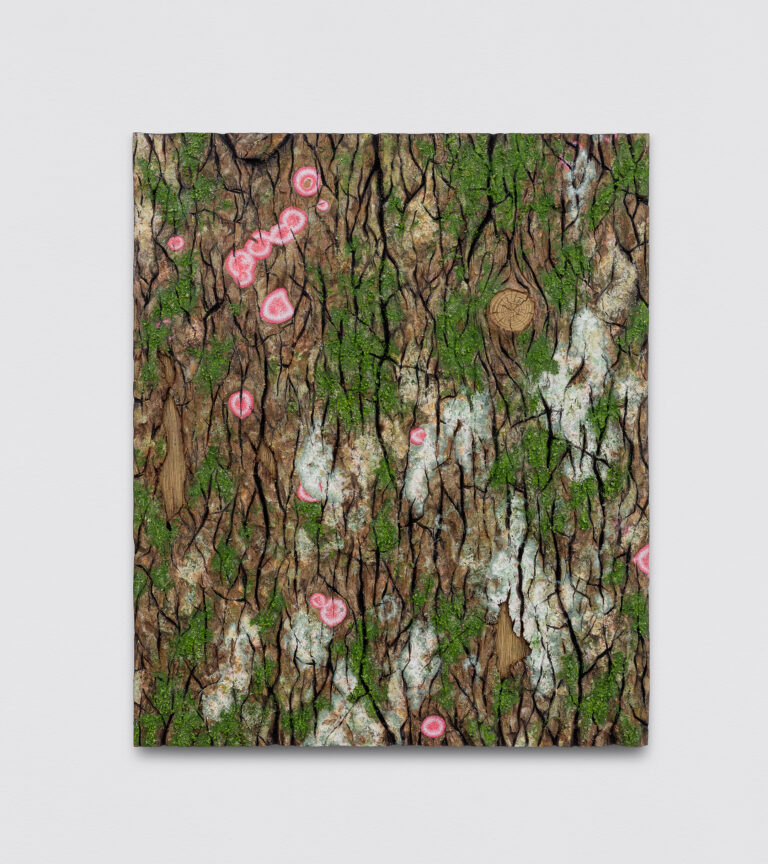
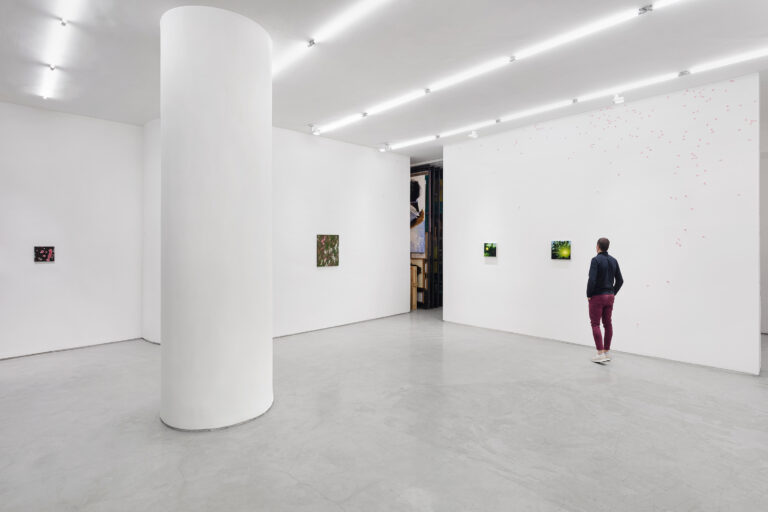
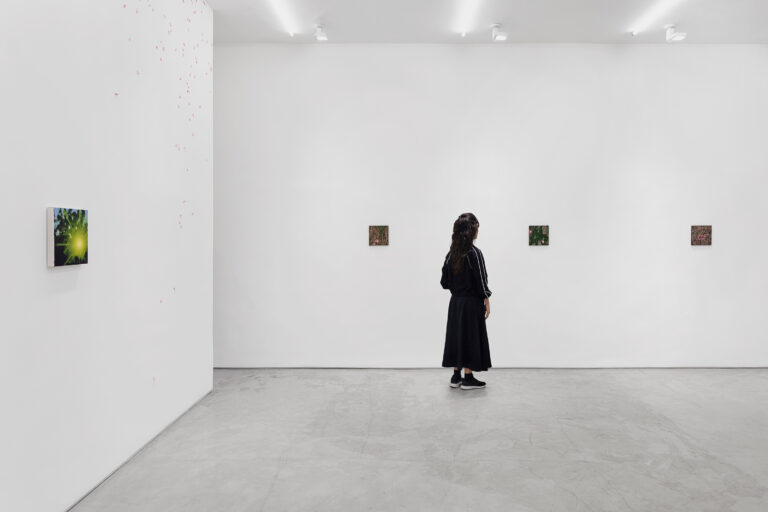
“I seek images that ask more than they answer,” the artist emphasizes when called upon to explain his choices. Because these works are not objects physically extracted from daily life and displaced into the exhibition space, he studies them meticulously until they become sculpted, molded, painted, and textured pieces, to the point where the distinction between what Piva has created and what inspired him is almost imperceptible. These are works set in motion to achieve a “distance from which to see what is near,” and “making one look” is the purpose behind this effort.
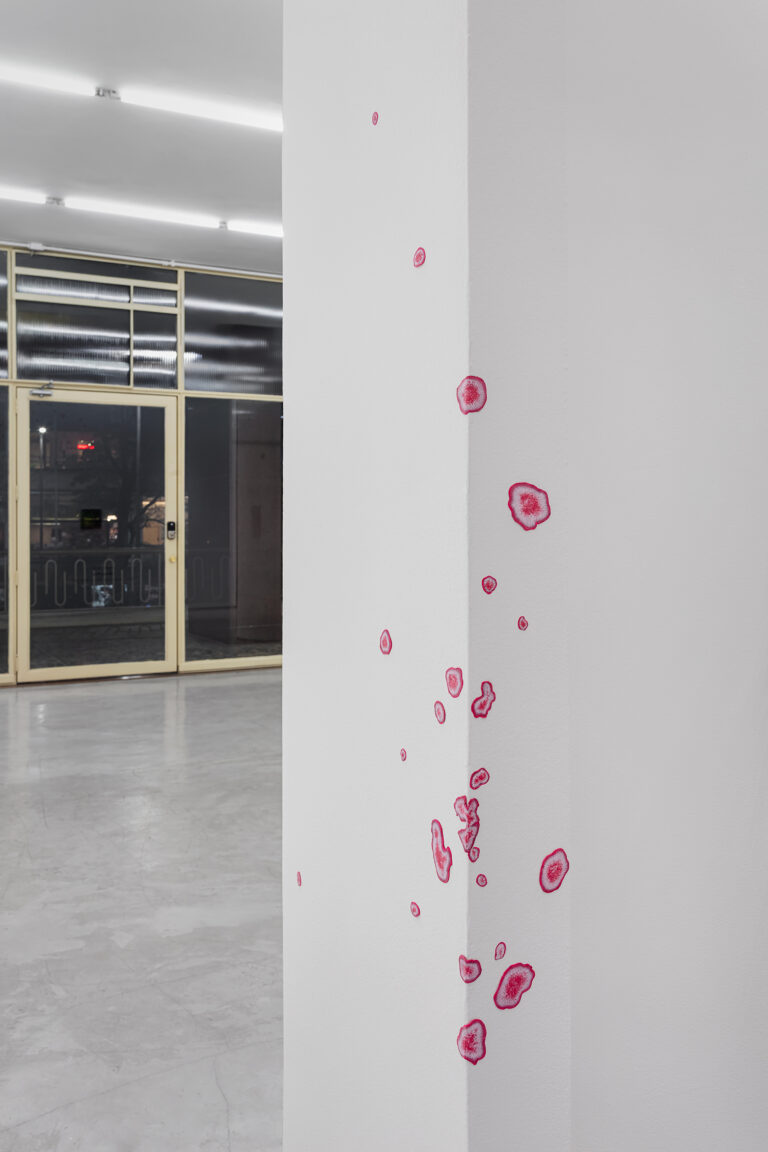
Piva exercises his perception throughout his daily routes and, in recent years, began noticing the red lichens on the tree trunks around him. Impressed by their role as bioindicators of good air quality, the artist associated these marks with expressions such as “fresh air,” “lighter air,” and “calm air,” phrases commonly used to describe environments, people, and situations alike.
The indeterminacy of these sensations motivated him to transpose the presence of lichen into domestic and affective contexts where well-being and tranquility might also be perceived. In doing so, however, he encounters the challenge of composing that which, by its very nature, resists being fully grasped.
Since nature is not static, to preserve it is already the first step toward artificializing it. From this understanding, Piva turns to recognizable forms and positions the human being as the locus where nature and culture meet and, simultaneously, as the creator of this very dichotomy. As an artist, he places himself in the role of mediating the ambiguities that inhabit existence itself.
In his impersonal self-portraits, what Piva has witnessed yet could never fully name spreads into a broader web of sensations and subjects. The recurring elements in his works arise from this reading, while the repeated use of his own name in the titles of his exhibitions sustains the coherence of his research. It is no coincidence that the subject in his works is constructed without the protagonism of the figure itself, allowing many people to identify with it.
The sensitivity toward which Piva directs his gaze offers craftsmanship as a counterpoint to the established regime of virtual imagery, and it is through this manual practice that his authorship asserts itself, above all through the technical virtuosity with which he engages his references. Through this approach, the artist reclaims the logic of artifice by applying a “crop” of personal experience within a framing akin to those found on social media.
At a time when distance from collective life seems to characterize the present, the online environment makes it even more evident how individualities intertwine and blur into one another. Through this act of sharing, the artist ventilates his worldview and brings it closer to everyday life, offering portraits of “where and how things are as they should be.”
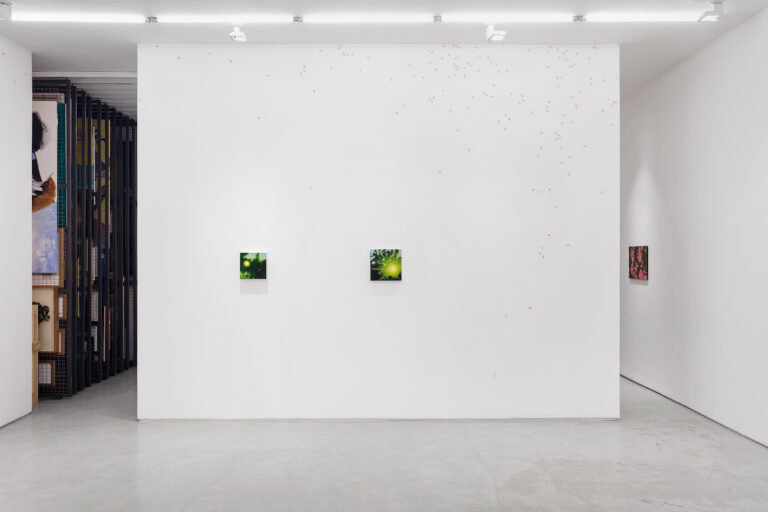
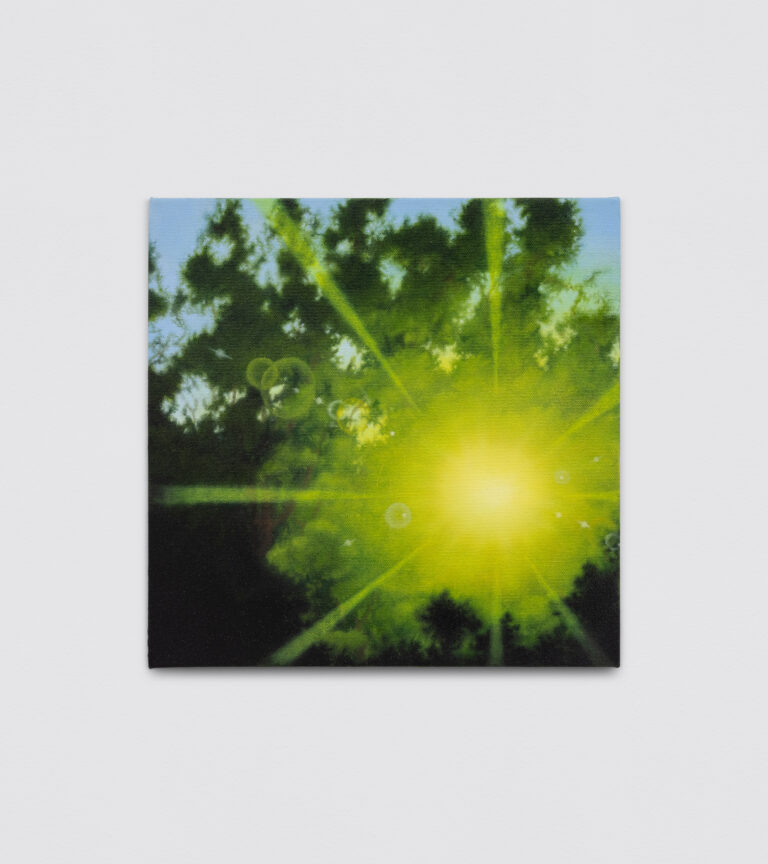
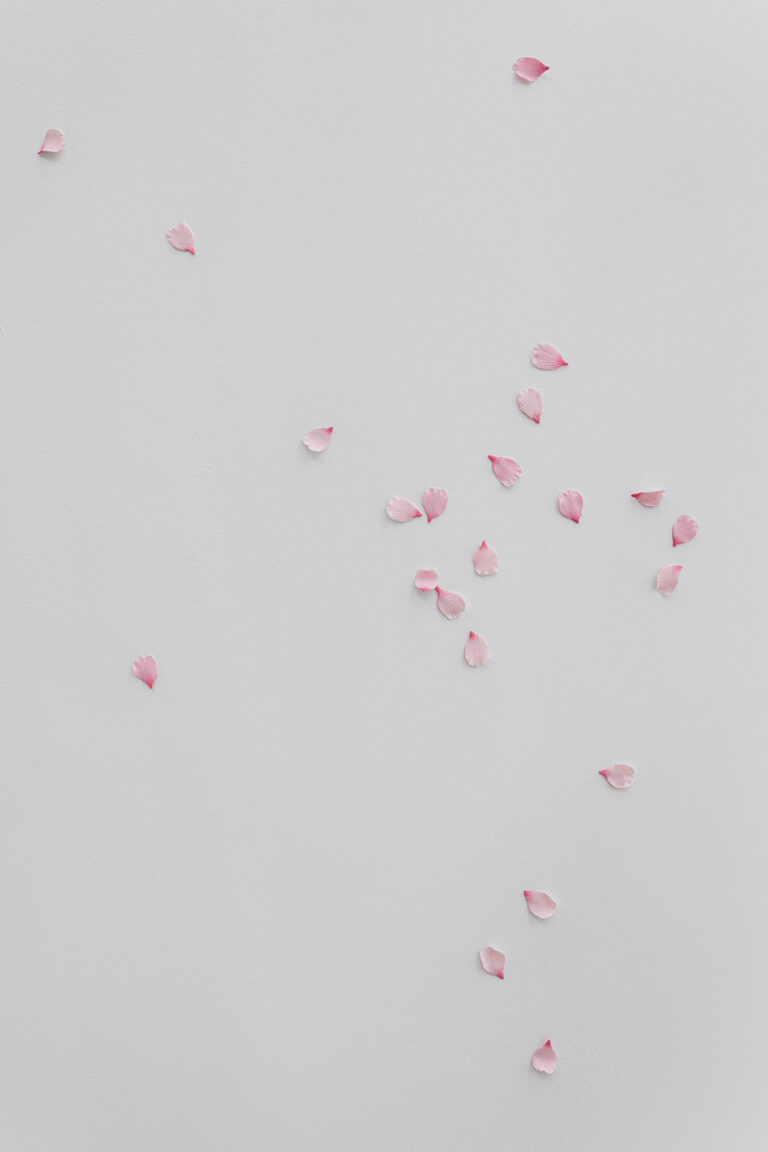
If escape from reality has always been present in Piva’s work, it is in the beams of light crossing his window and in the petals that mark the passing seasons that he finds unnameable and inimitable forms of existence. Without offering answers or subjecting them to attempts at precision, he is left with the greatest of delicacies: pointing toward what they make us feel.